current
Aalsmeer is not Amsterdam's backyard
Written questions Westeinderscheg
Explanation
The council letter of September 16, 2025, refers to the handling of Motion M20-24 from 2020 (Structural Vision Bovenlanden) and states that its implementation will be addressed within the Westeinderscheg regional implementation program of the Amsterdam Metropolitan Area (AMA). This program includes several projects that affect Aalsmeer, including a bicycle bridge at the end of Uiterweg – plans that the city council previously expressed its opposition to. Furthermore, the AMA implementation document reveals that many initiatives are not driven by Aalsmeer itself, but by surrounding municipalities or the province. At the same time, the Westeinderscheg positions Aalsmeer as a "recreational recreation area" for the Amsterdam region. This raises questions about local governance, the financial implications, and the connection with Aalsmeer's housing challenge and building behind the ribbons.
To ask:
1. Direction and decision-making
a. Can the council confirm that the implementation of Motion M20-24 (Structural Vision Bovenlanden) is now in fact embedded in a regional implementation program that has not been adopted by the Aalsmeer municipal council?
b. Which decisions can the municipality of Aalsmeer still make independently within the Westeinderscheg, and which decisions are (de facto) made at the regional level?
2. Previous council decisions
a. Can the executive board confirm that the municipal council previously expressed a negative opinion about the construction of the bicycle bridge at the end of Uiterweg?
b. How is this administrative decision of the council currently safeguarded within regional decision-making?
3. Aalsmeer as a recreational 'backyard' of the MRA
a. How does the municipal executive assess the risk of Aalsmeer becoming Amsterdam's recreational backyard, with open space in Aalsmeer being used to absorb urban recreational pressure?
b. How does an increase in day recreation relate to the existing spatial pressure, traffic problems, and quality of life in the Bovenlanden and along the Uiterweg?
c. Does the council believe that there is still physical space available in Aalsmeer for additional recreational facilities without this being at the expense of residential function, natural quality, and road safety?
4. Financial consequences
a. Can the council indicate which financial obligations (such as co-financing, management, maintenance, or operation) for Aalsmeer arise from projects within the Westeinderscheg?
b. Where are these costs included or estimated in the 2026–2029 Budget?
5. Living and building behind the ribbons
a. How does the council ensure that plans for small-scale construction behind the ribbons are not hampered by provincial and MRA agreements that designate the Bovenlanden as a recreation area?
b. Is the council prepared to confirm that living behind the ribbons and preserving the characteristic ribbon structure remain more important than expanding day recreation?
6. Local assessment framework and authority
a. Before entering into further regional obligations, is the Executive Board prepared to first establish a local assessment framework for the Bovenlanden in which:
- the Structural Vision for the Upper Lands region remains the primary starting point;
- recreation is only permitted where it is in keeping with peace, nature and living; and
- each regional project is submitted separately to the council for decision-making?
Conclusion – FlorAalsmeer vision
FlorAalsmeer is deeply concerned that Aalsmeer, without clear local guidelines, is increasingly being drawn into regional plans that primarily serve the interests of Amsterdam and the MRA. Our municipality already lacks sufficient space for young people, newcomers, and seniors; it shouldn't be the case that this same scarce space is being traded for even more day recreation from outside the municipality.
Aalsmeer isn't a backyard, an outlet, or a regional drain. It's an independent community with its own identity, its own residents, and a fragile landscape that deserves protection. FlorAalsmeer stands for peace, space, housing, and quality of life—for our own residents first.
The FlorAalsmeer faction has submitted written questions to the council about the so-called Westeinderscheg — a regional plan by the Amsterdam Metropolitan Area (AMA) and the province of North Holland.
In that plan, Aalsmeer is presented as a "recreational area" for Amsterdam. In other words: where the city no longer has space, Aalsmeer must provide it—for recreation and tourism. We find that unacceptable.
Aalsmeer is not a backyard, not an outlet, and not a drain for the region.
We stand for an Aalsmeer where space, tranquility and quality of life for our own residents are paramount.
Our questions include:
- who actually has control over these plans (Aalsmeer or the region?);
- how it is possible that there is room for day recreation, but not for housing for young people, the elderly and families;
- and whether the revised ark policy (living on water) will still have a chance if the province designates the Bovenlanden as a recreation area.
FlorAalsmeer wants the city council itself to decide what happens in Aalsmeer — not Amsterdam or the MRA.
We therefore ask the council for clarity, openness, and protection of our own living space. Aalsmeer belongs to all of us. Let's cherish the space we still have.
Follow-up questions Greenpark West (Samoaweg between Oosteinderweg and Aalsmeerderweg)
Written follow-up questions GPA II – Accountability, discrepancies and enforcement
Cause
In response to previous written questions (memo 67 and memo 74) regarding GPA sub-area 2 West, the FlorAalsmeer faction notes several contradictions, incomplete answers, and factual inaccuracies. These primarily concern the company's qualification as a distribution center, the assessment of actual use, traffic volume, and compliance with the zoning plan. These follow-up questions aim to clarify the municipal executive's responsibilities, oversight, and enforcement.
Accountability and authority
Pursuant to Article 125 of the Municipalities Act and Article 5:21 of the General Administrative Law Act, the Municipal Executive is authorized and obliged to monitor compliance with zoning plans and to take enforcement action in the event of violations.
The North Sea Canal Area Environmental Service has an executive role in environmental aspects, but not in the assessment of planning use.
The province of North Holland only has a supervisory role in cases of structurally failing municipal enforcement.
The college is therefore primarily responsible for compliance and enforcement within GPA II West.
1. Distribution center planning rules and qualification
Memo 67 states that the existing businesses, including YourCargoContact (YCC), meet the zoning plan criteria because they were assessed as "storage companies" based on their application. However, Memo 74 acknowledges that actual business operations are not assessed and that the "2G" category is merely an indicative index, not a legally binding zoning plan rule. YCC's website explicitly states that it is a distribution center. This appears to indicate actual use beyond storage.
To ask:
1.1 Will the council acknowledge that the reference to 'category 2G' has no legal basis within the zoning plan?
1.2 How has it been verified that YCC's actual operations as a distribution center are in accordance with its designated 'storage' purpose?
1.3 Can the council explain the precise basis for the conclusion in memo 67 – that the current use fits within the zoning plan?
1.4 FlorAalsmeer hereby requests the publication of the assessment notes and internal recommendations that form the basis for this assessment.
2. Control and enforcement
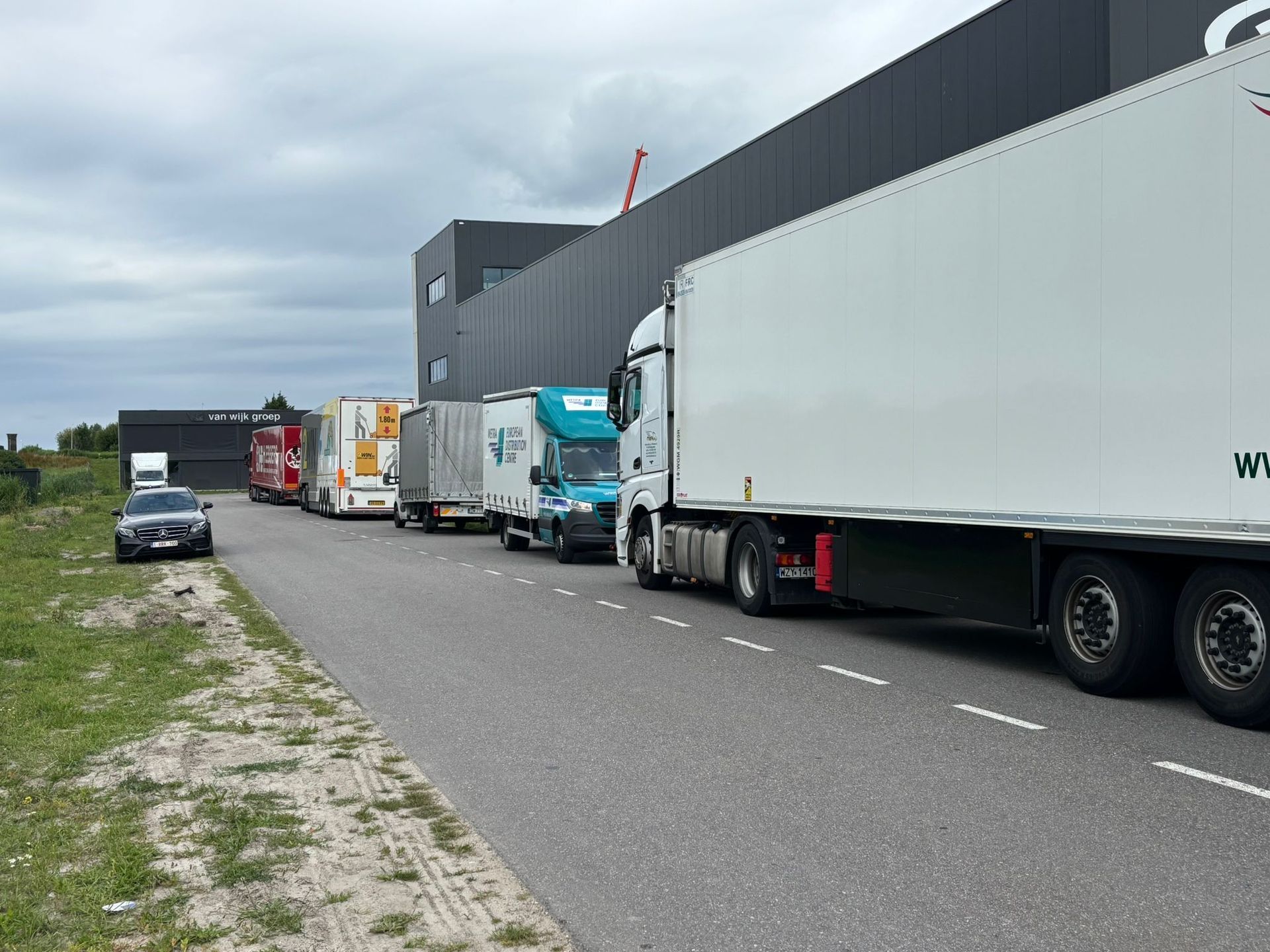
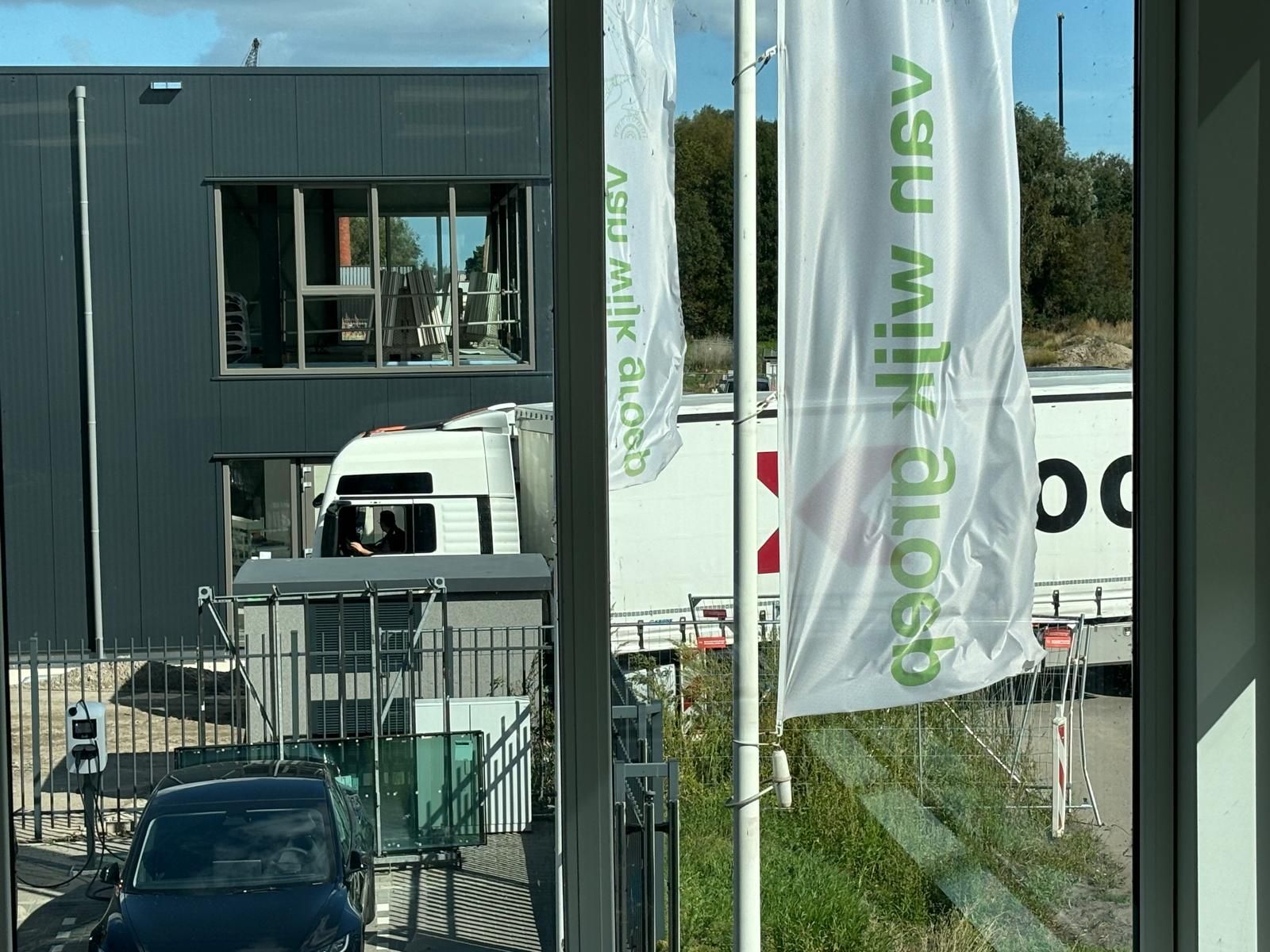
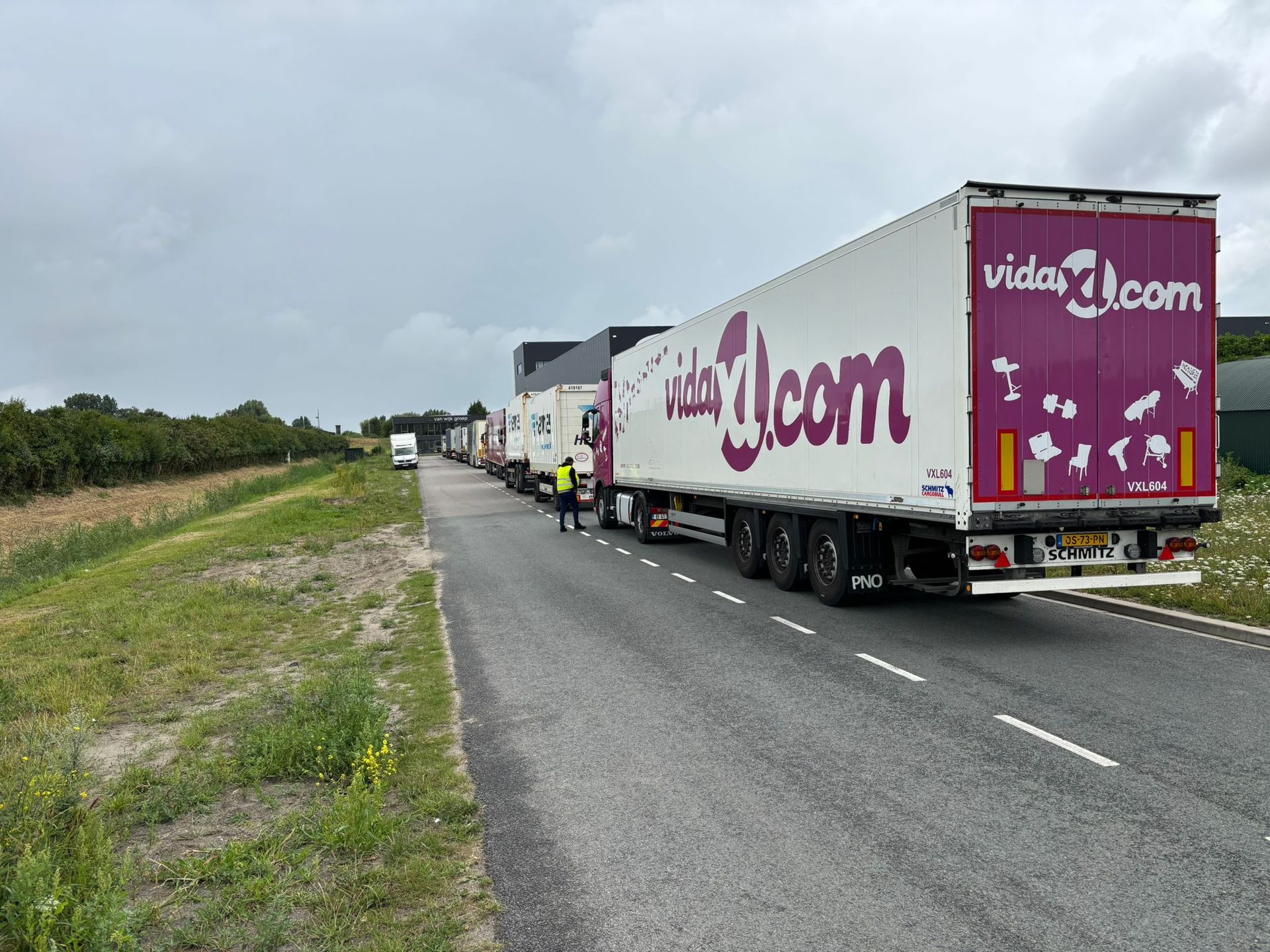
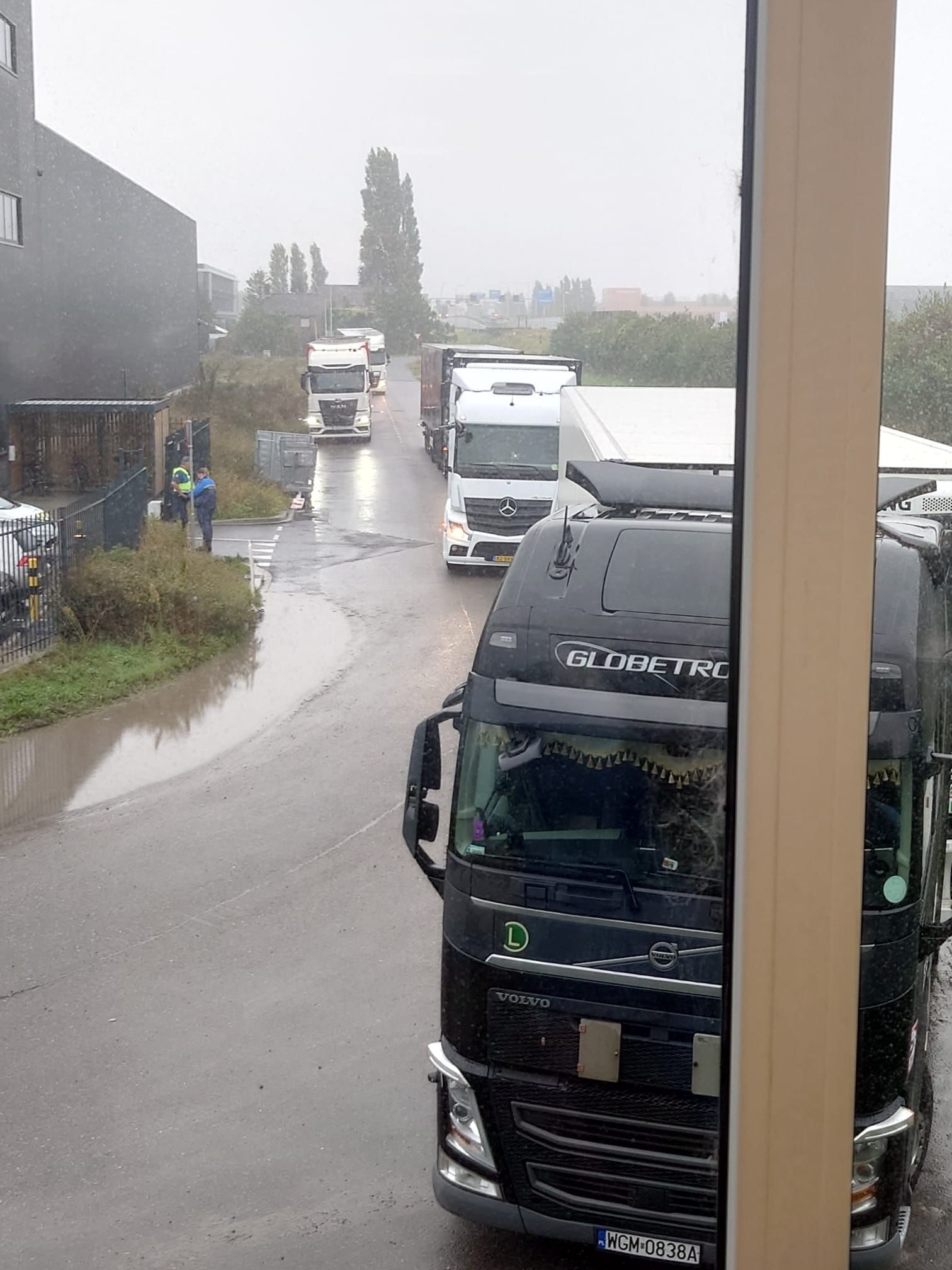
Memo 74 states that no periodic inspections are conducted and that no conflicting uses have been identified. Without actual inspections, such a statement is meaningless. There is a nuisance and traffic hazard caused by trucks parking despite prohibition signs and using other people's property to access the docks. This situation violates the principles of the zoning plan and permit conditions.
To ask:
2.1 Does the Board acknowledge that without actual checks, no reliable statement can be made about compliance?
2.2 When was the last company audit carried out and what were the findings?
2.3 Will enforcement action be taken against structural parking behaviour and manoeuvring on other people's property?
2.4 Is the board prepared to share an audit report with the council, including findings and photographs?
2.5 Does the council wish to use its own enforcement powers (Section 125 of the Municipal Act) and take enforcement action in the event of a violation, in accordance with the General Administrative Law Act?
3. Traffic and road safety
Memo 67 states that the number of traffic movements is consistent with the zoning plan and refers to a model-based expectation of approximately 900 motor vehicle movements per day. Memo 74, however, refers to "no more than 1,000 per direction in 2030" and also to 580 and 1,090 movements per day in 2035. No actual counts have been conducted. These varying figures and units are confusing and unverifiable.
To ask:
3.1 Why are different numbers, years, and units of measurement used in memos 67 and 74?
3.2 When were the last traffic counts carried out, and can they be provided to the council?
3.3 Is the council prepared to conduct and publish current counts?
3.4 Are exceedances of the traffic standard considered as conflicting use that gives rise to enforcement or revision of the zoning plan?
4. Planning and implementation of infrastructure measures
Memo 67 states that the Samoaweg–Machineweg connection would be ready by the end of 2025; memo 74 mentions early 2026. This change has direct consequences for traffic and safety in the meantime.
To ask:
4.1 What is the reason for this shift in planning and how is safety guaranteed until delivery?
4.2 What temporary measures is the council taking to improve traffic flow until the junction is ready?
4.3 Can the council receive a concrete schedule with tender status and milestones?
5. Transparency and accountability
The combination of contradictory answers, a lack of oversight, and the absence of measurement data raises questions about administrative oversight. FlorAalsmeer considers it essential that the council gains full insight into the actual situation and how the executive board fulfills its supervisory and enforcement duties.
To ask:
5.1 Will the Executive Board commit to reporting annually on actual compliance within GPA II West, including traffic, noise, and user functions?
5.2 Is consideration being given to developing an integrated GPA II enforcement plan that sets out supervision, frequency and responsibilities?
5.3 When will the Council be informed about this?
Final request
FlorAalsmeer requests the municipal executive board to provide the requested documents and explanations within 30 days. If the response indicates any conflicting use or violations, we expect the municipal executive board to take immediate enforcement action and inform the council accordingly.
Judith Keessen
FlorAalsmeer
Written questions FlorAalsmeer about CCTV Fire and Light Aalsmeer September 2025
During the Fire and Light on the Water event on September 5 and 6, 2025, reports were received that cameras had been installed at the Waterfront, along Kudelstaartseweg and Stommeerweg. Consultation of public sources shows that no designation order from the mayor has been published for temporary camera surveillance at these locations, as required by Article 151c of the Municipal Act and Article 2:77 of the Aalsmeer General Local Bylaw. This raises questions within our party regarding the legality of the deployment, compliance with the GDPR, and the protection of the privacy of residents and visitors.
To ask;
1. Can the council confirm that cameras were installed at the Waterfront, Kudelstaartseweg and Stommeerweg during the Fire and Light on the Water event (5 and 6 September 2025)?
2. If so, who installed these cameras and for what purpose?
3. What is the explicit reason for installing these cameras?
4. Has the mayor issued a formal designation decision for temporary camera surveillance at these locations on September 5 and 6, 2025?
5. If so, can we receive a copy of this decision?
6. If not: does the council acknowledge that camera surveillance took place without a legal basis?
7. How is compliance with the provisions of the GDPR ensured (such as publicity, information provision, proportionality, retention periods and access rights)?
8. Which body is the controller of the camera images in this case, and who had access to the images?
9. What does this mean for the legality of the use of the images and any enforcement action taken by the police or municipality?
10. Is the executive board prepared to provide the council with a complete overview of: the number of cameras installed, their locations, the duration of their deployment, and how the footage is handled?
11. What measures is the executive board taking to prevent cameras from being used in public spaces during events in the future without a formal decision?
12. Is the executive board willing to share an evaluation with the council regarding the camera surveillance during Fire and Light on the Water 2025, including the legal basis and compliance with privacy legislation?
13. If not, why not?
The use of camera surveillance in public spaces directly impacts the privacy of residents and visitors and, according to Article 151c of the Municipalities Act and Article 2:77 of the Aalsmeer General Local Bylaw, requires an explicit, formal, and public decision from the mayor. Transparency and compliance with legal frameworks are essential to protect residents' privacy and maintain their trust in the government. We look forward to receiving your responses.
FlorAalsmeer faction
Technical (follow-up) questions to the board – GPA sub-area 2 West
In its response to our previous questions, the municipal executive stated that a contractor and two commercial businesses are located in sub-area 2 West, which "according to the criteria in the zoning plan" meet the zoning requirements. This formulation raises further questions. We want to know exactly which criteria were applied, where they can be found, and how the actual business operations relate to them. We are explicitly concerned with the technical and legal justification, not with consequences or perception.
To ask
1. Planning rules and criteria
Can you specify exactly which criteria from the GPA zoning plan for sub-area 2 West were applied when issuing permits for the aforementioned companies?
– Please quote the relevant articles from the zoning plan regulations verbatim, including any exclusions or conditions.
– Please also include the IMRO number/plan identification and reference to the Statement of Business Activities included in this plan.
2. Trading companies category “2G”
The answer refers to trading companies category 2G.
– Where is this category legally defined in the zoning plan?
– Does the plan contain a separate table for this or does it refer to the VNG system?
– Can you provide the relevant passage or table row?
3. Definitions and definitions
What definitions does the zoning plan use for 'trading company', 'storage', 'distribution center', 'logistics company' and 'transport company'?
– If these definitions are missing: which normative framework does the municipality use for interpretation?
4. Assessment when granting permits
When assessing applications in GPA-2 West:
– Which articles and assessment criteria from the zoning plan were assessed?
– Was only the construction activity considered or also the use (planning activity)?
– Have environmental or traffic categories been explicitly taken into account?
5. Checking actual use
After commissioning, is it checked whether the business operations correspond to the permitted function of 'trading company'?
– If so, which specific indicators are used (for example, trade/storage ratio, number of dock doors, freight movements per day)?
– How and how often does re-inspection take place?
6. Public expressions as a signal
One of the companies involved publicly profiles itself as solving logistics problems for other companies.
– Are such expressions (website, vacancies, marketing) included as a signal during assessment or enforcement?
– What standard of proof does the municipality use to determine whether there is a question of logistics services rather than subordinate logistics in trade?
7. Legal review notes
When issuing the permit, were legal review notes drawn up that explicitly state that the business operations fit within the permitted purpose?
– If so, can the council make this available for inspection (anonymised where necessary)?
8. Future traffic space and expansion capacity
Can you indicate exactly how many traffic movements are currently being recorded in GPA sub-area 2, broken down by company?
How does this compare to the results of the traffic study conducted prior to the adoption of the zoning plan?
– Please state the year of the study, the measurement method used, and the assumptions on which the traffic forecasts are based.
– Where in the zoning plan or the underlying documents (explanation, research) is it stated what the maximum acceptable traffic movements are?
9. Route choice and road safety in built-up areas
– Given the current burden of one company, to what extent is there still room within the forecast for new commercial spaces to be built and companies that will still establish themselves in sub-area 2?
– What is the total number of traffic movements (current situation future implementation)?
– What criteria are used to assess whether these numbers fit within the capacity of the access roads?
We request that the board answer the above questions as completely as possible and include references to the zoning plan regulations and underlying documents. We are concerned with the strict criteria and the method of assessment and enforcement, not with retrospective interpretations.
Judith Keessen
FlorAalsmeer
Questions regarding Groupcard's bankruptcy and possible takeover
Questions about the involvement and follow-up actions of the Municipality of Aalsmeer regarding the bankruptcy of Groupcard and the Westeinderpas
Explanation:
On July 1, 2025, Groupcard BV, the operator of the Westeinder Pass, among other things, was declared bankrupt. Several other companies affiliated with Groupcard have since gone bankrupt, including Groupcard Commercial BV, with which the municipality of Aalsmeer presumably had an agreement.
In the article "Company behind Westeinder Pass possibly embezzled €300,000 intended for minimum income schemes in Zaandam" dated July 25, 2025, in Nieuws in Aalsmeer, the Municipality of Zaanstad reports possible embezzlement of subsidy funds and is considering legal action. The Municipality of Aalsmeer was unavailable for comment at the time of this report.
To ask:
Can the council confirm whether the municipality of Aalsmeer had an agreement with Groupcard BV or one of its subsidiaries, such as Groupcard Commercial BV?
- If so, which contract(s) exactly are involved and for what performance(s)?
Does the council have insight into Aalsmeer funds that were or are held by Groupcard (or affiliated entities), such as subsidies, advances, or credits for residents or businesses?
- Can the board indicate whether there is a financial risk or loss of capital?
Is Aalsmeer currently taking any action towards the trustee, creditors' council, or the Association of Netherlands Municipalities (VNG) regarding potential damage or advocacy?
- If not, why not?
Is the municipality of Aalsmeer in discussions with other municipalities and/or the Association of Netherlands Municipalities (VNG) about a joint acquisition, relaunch, or replacement of Groupcard's services?
Is consideration being given to continuing the Westeinder Pass under municipal management or transferring it to another reliable operator?
Are there any residents, businesses, or organizations in Aalsmeer currently experiencing losses as a result of the Groupcard bankruptcy?
- If yes, what does the municipality do to protect their interests?
Can the council indicate whether the privacy or personal data of residents (such as those participating in the Westeinder Pass or energy poverty schemes) have been safeguarded in the event of bankruptcy?
What control does the council have over the expenditure of the €70,000 subsidy from the Corona Incentive Fund (2022) on the Westeinder Pass project?
- Is the council prepared to have these subsidy expenditures independently assessed?
Is the executive board prepared to actively inform the city council and residents about the possible consequences of the Groupcard bankruptcy for Aalsmeer?
Final comment:
These questions are intended to clarify Aalsmeer's position in the Groupcard bankruptcy, to mitigate potential risks in a timely manner, and to ensure transparency for the council and residents.
Judith Keessen
FlorAalsmeer
Read also;
Bankrupt gift card company had no license, money appears to be gone - NOS 01-08-2025
FlorAalsmeer concerned about the consequences of the Westeinder Pass bankruptcy and asks for clarification - News in Aalsmeer 30-07-2025
Questions about Asian Hornet
Dear council,
The Asian hornet is an invasive species that has steadily spread in the Netherlands in recent years. Several sightings of both queen bees and nests have also been made in Aalsmeer and Kudelstaart. Local beekeepers are concerned about the impact on their bee colonies, now that the hornet is actively preying on honeybees and other pollinating insects. This development poses a threat not only to the bee population but also to biodiversity and the local ecosystem. Furthermore, the Asian hornet can be dangerous to humans if disturbed.
For effective control, timely detection, good cooperation with residents and beekeepers, and adequate measures are essential. In light of this, I have the following written questions for you:
1. Can you indicate how many reports of Asian hornets and nests have been received in the municipality of Aalsmeer, including Kudelstaart, since April 2025? Do you see an upward trend?
2. What structural coordination is there with local beekeepers and nature organizations regarding monitoring and control of the Asian hornet?
3. What preventive measures have been taken in Aalsmeer and Kudelstaart in the spring and summer of 2025, such as traps, information provision, or subsidies?
4. How many nests have actually been removed in our municipality to date? Who carries out these removals and who bears the costs?
5. What communication tools does the municipality use to inform residents about recognizing, reporting, and safely dealing with Asian hornet nests?
6. What measures is the council taking to protect local biodiversity and pollinators against this invasive species?
7. What resources does the municipality have to effectively implement the control measures, and how do these compare to the available provincial or national budgets?
8. Is the council prepared to conduct research into trends in the spread of the Asian hornet and the effectiveness of measures taken?
FlorAalsmeer faction
Questions regarding the umbrella zoning plan for the Aalsmeer room rental company
Dear council,
FlorAalsmeer has the following questions for the council pursuant to Article 39 of the Rules of Procedure:
Has the Province issued written advice regarding the establishment of a migrant shelter on Lakenblekerstraat? FlorAalsmeer would like to receive this advice.
There are policy rules regarding the establishment of migrant housing in industrial estates. How does this provincial policy relate to the umbrella zoning plan? The point is that the Province has set a maximum time limit of ten years for such accommodations. The municipality is now deviating from this, in a LIB zone. Is that justifiable?
- Floralsmeer has noticed that another migrant shelter is now being established within a 200-meter radius. We refer to an article in Nieuws in Aalsmeer dated June 27, 2025. We therefore wonder whether the umbrella zoning plan recently adopted by the council is still up-to-date.
Yours sincerely,
Judith Keessen
FlorAalsmeer
Questions about logistics activities, nuisance and road safety GPA II East/West 25-06-2025
Dear council,
In response to recent developments and signals from the area surrounding Green Park Aalsmeer (GPA) sub-area II East/West, FlorAalsmeer is addressing the following written questions to the council.
In 2022, the council explicitly stated in a motion that logistics activities are undesirable in GPA II unless there is a direct connection to provincial roads. Furthermore, commitments were made regarding the establishment of suitable businesses that would not cause disproportionate traffic pressure or inconvenience.
Documentation in iBabs:
- Motion to freeze logistics activities (29-09-2022) → can be found under motions 2022.
- Memo “Logistics Freezing” (18-04-2023) → under council memos April 2023.
- Motion on noise abatement (14-03-2024) → motion ID 517, council decision on the zoning plan GPA II Oost.
However, the following has now become apparent:
Companies established in GPA II carry out logistical activities that do not fit in with the principles of the municipal council;
There is facade advertising without a permit, which is contrary to the rules;
The nuisance for local residents is already very high, both in terms of traffic and noise;
If the Samoaweg is extended to the future supermarket and homes, this route will function as a through road for freight traffic, which seriously compromises road safety;
Trucks are illegally parked on Samoaweg every day, despite a traffic ban. This causes disruption and dangerous situations. There's a feeling that this is not being adequately enforced.
The exit from Samoaweg onto Aalsmeerderweg is very confusing, which can lead to unsafe situations when traffic increases;
It is expected that when new commercial buildings are completed and occupied, traffic pressure and safety will increase significantly.
To ask:
Which companies in GPA II East and West are currently carrying out (logistics/distribution) activities that fall under category 3.1 or higher, and are these in conflict with the agreed-upon zoning or the principles of the council resolutions?
What is the council doing to enforce regulations against companies that perform logistics functions in violation of the established frameworks, and what concrete steps have been taken since the April 2023 memo "Freezing Logistics at Green Park Aalsmeer"?
- What reports or observations have been made regarding unpermitted facade advertising in GPA II East/West, and how is this being enforced?
Is there currently active enforcement against illegally parking trucks on Samoaweg, where a traffic ban is in effect? How often are checks carried out, and what are the results?
Does the council also consider the exit from Samoaweg onto Aalsmeerderweg to be confusing and risky, and what measures are being considered to improve road safety there?
Does the council have an overview of future traffic flows after the Samoaweg extension, and what does this mean for road safety for residents, cyclists, and pedestrians in the immediate vicinity?
- Will the development of the nearby residential and shopping area (including the supermarket) take into account the prevention of freight traffic via Samoaweg? If so, how? If not, why not?
Is the council prepared to (re)impose traffic measures and/or traffic decisions that exclude logistical freight traffic in GPA II through residential areas and narrow roads such as Samoaweg?
What measures does the council intend to take before new businesses establish themselves and the area is fully developed to structurally guarantee road safety?
How will local residents be involved in these developments, and is the council willing to organize additional participation or resident evenings regarding road safety and nuisance in the area?
If desired, we can provide you with extensive visual material (photos/videos) sent to us by neighboring businesses and residents. We look forward to answering these questions.
Yours sincerely,
Judith Keessen
FlorAalsmeer
Questions Waterfront/Westeinderplas 18-06-2025
Dear council,
The spatial justification dated January 18, 2018, states under No. 04-02 Zoete Plas that 6,133m² of Natuur Netwerk Nederland (NNN) land will be lost during the construction, and 7,380m² will be restored elsewhere. The province has approved the boundary adjustment (according to an email from the province to the municipality dated June 2, 2020). The compensation consists of areas H397, H434, H435, and H436, totaling 7,380m². Research has shown that these areas are located within the Westeinderplas, which is already a NNN area.
Question: Why is an NNN offset used to cover an NNN area?
At Flora and Fauna, everything has been investigated in the field of flora and fauna with regard to breeding grounds, etc.
Question: Why isn't the peregrine falcon breeding ground in the Water Tower included in this?
The Spatial Justification states that the recreational function of the starting island will be increased and that the accessibility and experience of the public islands will also be improved.
Q: How are things going with this?
During the construction of the Waterfront, 6,133 m² of water was reclaimed. This was entrusted to the Bovenlanden region to create environmentally friendly banks and to cover the remaining meters that would have been excavated at the Omval.
Q: What about this compensation?
A NIVZ report has been drawn up about the swimming water at Surf Island.
Question: What will happen to the yellow ball line that marks the boundary of the (much too small) swimming water?
The yellow ball line along the stones must be a RED ball line.
Q: When will this change?
Question: What will happen to the remaining NIVZ recommendations?
When extending the pier, Rijnland recommended a WIDE opening to prevent the growth of blue-green algae. An eel fisherman from Kudelstaart also stated that there is an increased risk of blue-green algae if the pier is extended without a wide opening. Now, blue-green algae appears (almost) immediately during warm weather, and red signs must be posted as a warning. This is very detrimental to public health.
Question: When will excavation begin to create a wide opening in this pier to allow for free flow, as recommended by Rijnland?
Awaiting your response,
Dirk Biesheuvel
FlorAalsmeer
Questions Fixi notifications 18-06-2025
Dear council,
The articles regularly refer to Fixi notifications, among other things.
Are there any figures on these Fixi reports?
If so, how many reports were filed in the first five months of 2025, and for which categories, and what was Fixi's response? Often, the response is "closed" (or something similar), even though there's no visual indication.
Awaiting your response,
Dirk Biesheuvel
FlorAalsmeer
Questions from BOAs/enforcement officers 26-05-2025
Dear council,
As far as we know, the municipality of Aalsmeer does not have any enforcement officers/BOAs employed by the municipality of Aalsmeer. There is an agreement with
Amstelveen on the deployment in Aalsmeer. In a conversation with a municipal enforcement officer, he indicated that he would only be present "if paid."
Questions to the board;
- Who decides where and how often BOAs are deployed? Are the costs for BOAs annual or based on installments? And are these costs billed in advance or afterward? Do these costs depend on the deployment? Is it true that BOAs cannot be present—despite an agreed-upon schedule—because "no payment has been made"?
Awaiting your response,
Dirk Biesheuvel
FlorAalsmeer
Questions Fort Kudelstaart 22-01-2025
Dear council,
In December 2023, the collaboration with Zeilfort Kudelstaart ended. The council indicated that
to be involved in the follow-up process and to provide input and frameworks for any possible
The development of Fort Kudelstaart. It is now January 2025, and our group has the following questions:
- What is the current status of Fort Kudelstaart?
- During the council's working visit, it was clear that work has been carried out and a lot has been cleaned up. A restroom facility is also under construction. Can the Executive Board provide clarity on this?
- The City Council's wish was clear: before submitting a proposal, first consult with the Council to gather input and frameworks, which the Council itself provides. When will the Executive Board meet with the City Council to gather input and frameworks as requested?
Awaiting your response,
Judith Keessen
FlorAalsmeer
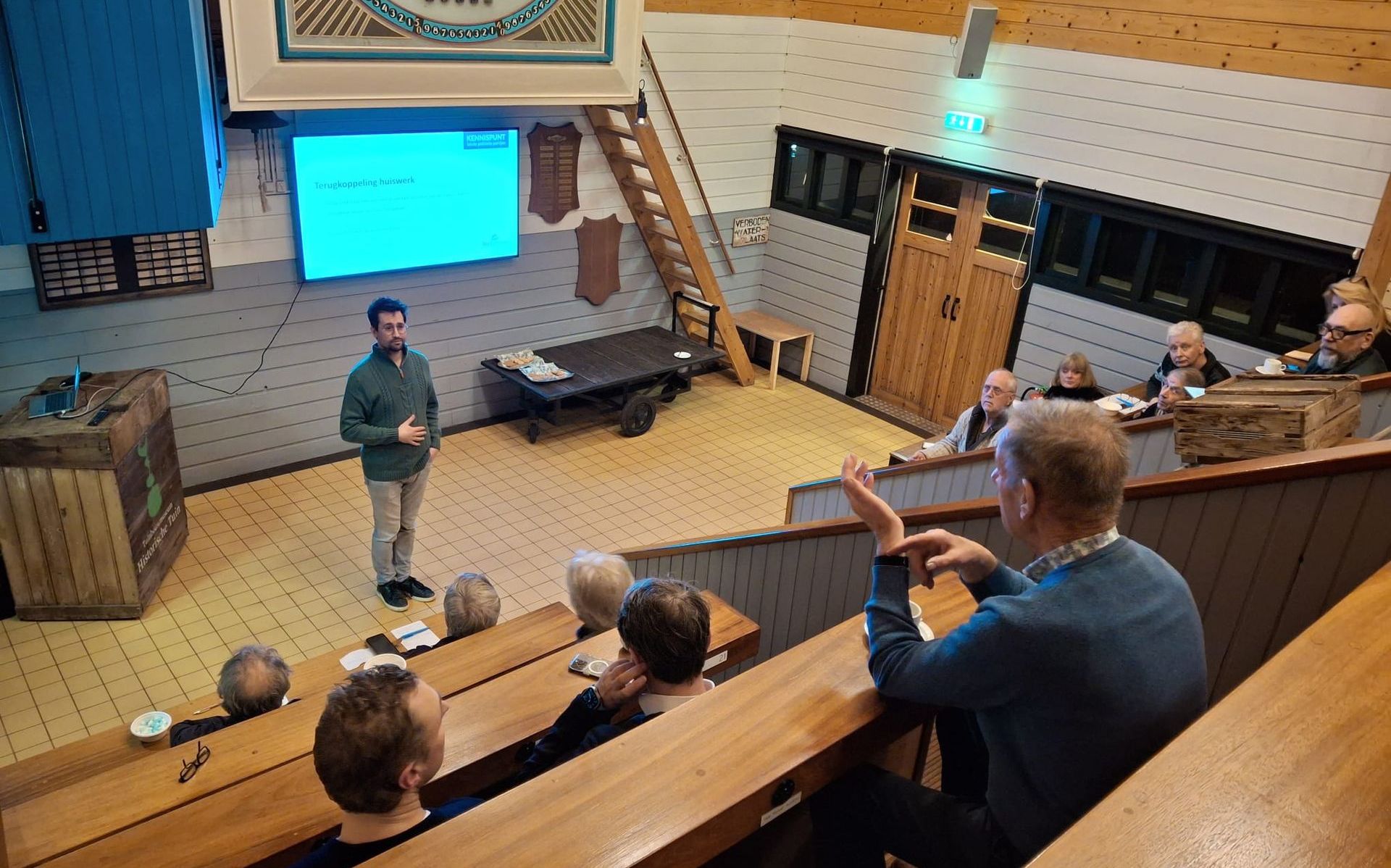
FlorAalsmeer shows that local politics can be fun!
An inspiring second evening on local politics was organized by FlorAalsmeer on Wednesday, February 12th. FlorAalsmeer members Judith Keessen and Dirk Biesheuvel chose the quintessential Aalsmeer location for the evening: the Veilingzaal in the Historic Garden.
The interactive meeting for residents of Aalsmeer and Kudelstaart was once again facilitated by Mr. Axel Eerdman, a trainer and former council member affiliated with the 'Kennispunt Lokale Politieke Partijen' (Local Political Parties Knowledge Center).
Part of the evening focused on the question: "What is the municipality responsible for?" It focused on the fact that a municipality has a significant influence on the daily lives of citizens and is responsible for various important tasks and decisions at the local level. It also addressed the influence a municipality has on a wide range of matters that directly impact the lives of residents. Tasks include spatial planning, education, healthcare, public order, and safety. It also addressed the municipal council, the highest decision-making body in the municipality, which assesses council proposals, has a supervisory role, and also determines the municipal budget.
Most of the evening was devoted to the homework assignment I received on the first night. It was an interesting one! Find a political party activity or a substantive debate FlorAalsmeer participates in that's relevant to Aalsmeer and Kudelstaart, and share your opinion on it—your opinion as a resident of Aalsmeer and Kudelstaart—and offer tips.
The diversity of the participants also ensured a wide range of topics were discussed. This meant that everyone brought in different topics from their own perspective, making the discussion very versatile. Topics raised by participants included concerns about additional transformer substations in Hornmeer, public green spaces, uneven and dangerous paving, the FlorAalsmeer initiative document for affordable housing in Kudelstaart, the nuisance caused by Schiphol Airport and concerns about increasing air traffic, the housing shortage and affordable housing for young and old, and concerns about the protection of the 'Fort bij Kudelstaart'.
A highly diverse range of topics kept the participants, as residents of Aalsmeer and Kudelstaart, engaged. Lively discussions ensued, ideas and thoughts were exchanged, creating a veritable think tank. FlorAalsmeer is keen to hear what people are thinking, and their concerns were met with detailed discussions on all relevant topics, often firsthand, from stakeholders and/or those involved. Arrangements were also made immediately to visit the site to assess the situation and help residents decide how to proceed.
The inspiring evening course concluded in the coffee room of the "Historical Garden," a wonderful place for such a gathering of Aalsmeer residents. The suggested homework assignment topics were discussed in detail there. Follow-up meetings were made among the participants and with the FlorAalsmeer faction members. This format, consisting of evenings and contact with residents of Aalsmeer and Kudelstaart, has left them wanting more.
Housing and greenery in Kudelstaart – time for action and clarity
The call for more housing for young people and seniors, as well as more green space, is loud in Kudelstaart. It's a call that FlorAalsmeer has taken to heart. However, the municipality hasn't heeded the appeal from landowners on Mijnsherenweg. Growers have had plans to build here for twenty years, but they've consistently encountered a wall of municipal inertia and resistance. This was reason enough for us to submit the initiative proposal for housing development to the council and the executive board.
Municipal opposition hinders progress
Despite the logical and urgent nature of our plans, the alderman refused to include the possibility of housing development on Mijnsherenweg in the Kudelstaart area vision. This prompted us to temporarily postpone our proposal. We wanted to create an opportunity to convince the council that these plans were at least worthy of serious discussion. Unfortunately, there was little movement within the coalition parties, who insisted on addressing the area vision before even considering our plans.
During the council meeting of November 14th, we opted to postpone our proposal and instead submitted a motion. This motion called on the executive board to incorporate the framework of our initiative proposal into the draft area vision, so that the council could make a comprehensive assessment. This would not only concern the housing plans but also provide insight into the viability of the horticultural clusters in this area.
Alderman's commitment offers hope
During the discussion of our motion, the alderman made an important commitment: the study into the future sustainability of the horticultural area and the discussion about possible housing development would be part of the area's vision. The board would also incorporate current reports from Greenport, among others, into this discussion.
Based on this commitment, we decided to withdraw our motion, as it was no longer necessary. However, we did explicitly remind the council of their responsibility to consider these issues seriously and fully. Maintaining our proposal does not mean we are withdrawing, but rather that we are saving it for a later date, when the area vision is actually discussed.
Uncertainty about timing
To our surprise, the discussion of the area vision has been postponed until probably the second quarter of 2025. The reason for this delay is unclear. We will request clarification from the portfolio holder during the question period on December 3rd.
Time for action and transparency
Residents' desire for more housing and the preservation of green spaces cannot be ignored any longer. The postponement of the area vision raises questions, and it is crucial that the municipality communicates clearly about the progress and choices. FlorAalsmeer remains committed to keeping this topic high on the agenda and ensuring that the plans for housing development on Mijnsherenweg are taken seriously. This matter will be pursued further, but it is time for the municipal executive and council to take decisive action.
The residents of Kudelstaart deserve clarity and perspective, or, as FlorAalsmeer always says: say what you do and do what you say.
FlorAalsmeer initiative note for affordable housing in Kudelstaart postponed
On September 17, 2024, the FlorAalsmeer initiative proposal was again on the agenda of the advisory committee. In the weeks following the advisory committee meeting on September 3, our party held several meetings with stakeholders. One of the meetings on our list was with the municipal executive board, the portfolio holder. Unfortunately, this meeting was cancelled due to unforeseen circumstances. However, FlorAalsmeer considers it very important that this meeting take place. We want to handle this proposal carefully, as it can meet the significant need for housing for first-time buyers and seniors. This means that we not only want to keep residents well-informed about the progress of this process but also want to inform the council in a timely manner and update them if the proposal needs to be amended, which was not possible in this case. For this reason, FlorAalsmeer has decided to postpone the proposal for consideration by the next advisory committee meeting in the next cycle, on October 23.
What does the proposal entail? It concerns the plots of land owned by several growers on Mijnsherenweg in Kudelstaart. They see their business is not sustainable for the future and have no successor. Several plots have been for sale in the past, but there is no interest. This also applies to another 18-hectare plot on Hoofdweg, which has been for sale for over six months and has attracted no interest from growers/growers. The costs that would have to be incurred to comply with the regulations that take effect in 2030 are extremely high. Without a successor and with outdated greenhouses, financing this is impossible to achieve.
Several years ago, the aforementioned growers devised a plan to transform these plots into housing, particularly since part of them had already been designated for housing development 20 years ago (Proosdij-Noord); see also the shortcuts in Linksbuitenstraat and Zijlijnstraat. However, they were unable to gain a hearing from the municipality. Two years ago, the growers contacted our party chair, Judith Keessen. FlorAalsmeer had brought this to the alderman's attention five times, and a request was made to speak with these growers. However, during the presentation of the first version of the Kudelstaart area vision on May 14th, it became clear that discussions had only been held with one grower on Kaktusweg. This prompted the FlorAalsmeer party to submit a motion to bring this area and its potential to the attention of the council and the executive board.
The growers haven't been sitting idle all these years; they've explored the possibilities themselves and developed a plan. A plan that doesn't require land ownership changes or expropriation, and doesn't include any costs in the price. This plan itself isn't part of our proposal, but it clearly demonstrates what's possible. FlorAalsmeer believes in thinking in possibilities, not problems!
All plots are owned by growers located on Mijnsherenweg. One plot was sold over 20 years ago, and its owner presented the proposed plan on behalf of the other owners/growers on September 3rd. You can find this presentation via one of the links below.
What exactly does the initiative proposal entail? The proposal asks the council to decide the following:
1.To declare that the proposed building plan is in line with the existing Housing Vision and anticipates the key points from the draft Housing Vision 2024-2030, and also meets the strong desire expressed more than once by the residents of Kudelstaart to build suitable homes for the target groups of starters and the elderly;
2.To instruct the municipal executive to prepare a partial zoning plan amendment to the Kudelstaart 2019 zoning plan and to submit it to the municipal council for decision-making as a matter of priority before the end of 2024;
3.In this proposal to the municipal council, an amendment authority for the purpose of housing construction should be included.
This means that the council instructs the executive board to enable housing development on these plots. Nothing more, nothing less.
Kudelstaart and Aalsmeer are facing a significant housing shortage. The Westeinderhage and Buitenveen (Oosteinderdriehoek) neighborhoods currently under construction do not offer the affordable housing our young people are seeking. Moreover, these homes are available to the entire region and will not cause a shift in the local housing market. In addition to the agreements within the MRA and the mandate from the national government, FlorAalsmeer believes that the municipality itself has a primary responsibility for providing affordable housing for young people and the elderly, the primary target groups.
Would you like to read the initiative proposal? Then click here.
The presentation of the proposal can be found here

FlorAalsmeer initiative note for affordable housing in Kudelstaart
The fact-finding committee meeting, which addressed FlorAalsmeer's initiative proposal, met on September 3, 2024. Would you like to watch the meeting again? Click here. here.
Would you like to read the initiative proposal? Then click here.
The presentation of the proposal can be found here
The advisory committee will meet on September 17th to discuss our proposal again. You are also welcome to attend in the gallery of the council chamber. The meeting begins at 8:00 PM.
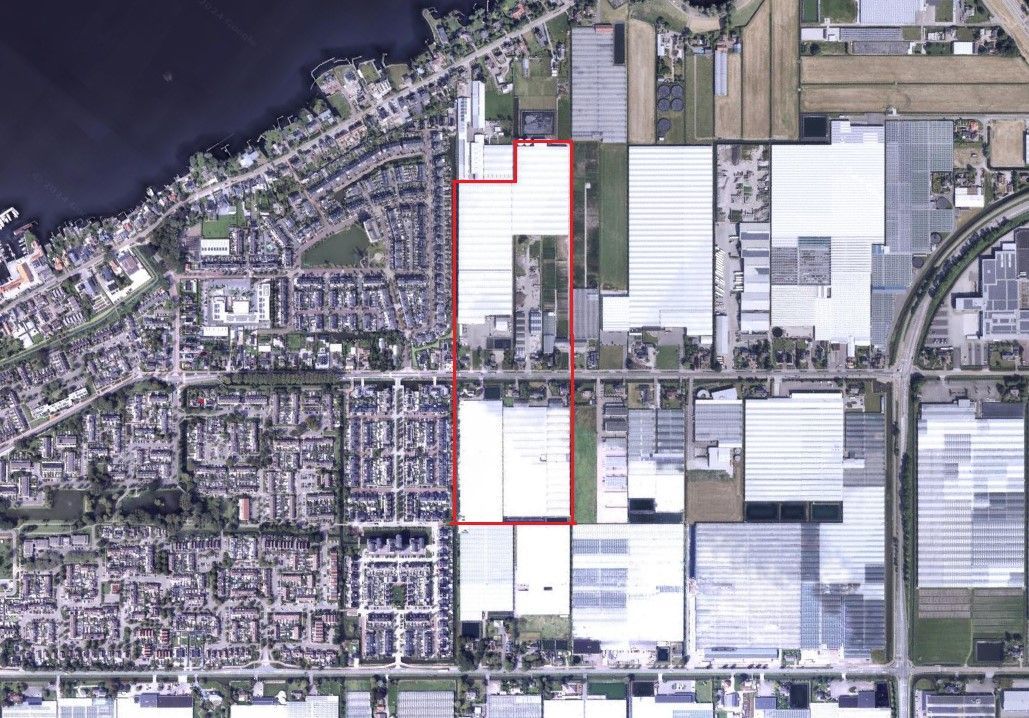
General Considerations 2024; 'Do what you say and say what you do'.
FlorAalsmeer hears from residents that they still have little to no confidence in local government. Residents don't see references to platforms and surveys as "participation," but rather as ticking boxes. Residents don't feel heard and often say, "They do what they want anyway." FlorAalsmeer calls for improved government-resident relations: show what you're doing, involve residents, and open the door to meaningful dialogue.
FlorAalsmeer naturally also has a responsibility in this area and wants to take the lead. A good example is the bill we submitted for the construction of 300-350 homes in Kudelstaart, a wonderful initiative by growers.
FlorAalsmeer wants the council to have more influence on the frameworks currently being presented to us by the executive board. All parties represent residents with ideas, wishes, complaints, and compliments. Continuing discussions with residents and the council will ensure that choices are better understood, made, and adjusted where necessary.
The energy challenge, shrinking budgets, and government restrictions will pose a major challenge in the coming years. FlorAalsmeer finds it inexplicable that residents might face cuts in water consumption—a basic necessity—while data centers continue to use millions of liters of drinking water. This also applies to electricity; residents should not be (temporarily) without power due to grid congestion. FlorAalsmeer has asked the municipal executive board, together with grid operators, to explore the possibility of local battery storage to guarantee local electricity for residents. Where there's a will, there's a way.
You can only preserve what you have if you take good care of it. Maintenance of roads, cycle paths, and green spaces shouldn't be subordinated to less urgent, ambitious plans. A pleasant, healthy, and future-proof living environment for all residents of Aalsmeer and Kudelstaart—that's what FlorAalsmeer stands for!

FlorAalsmeer initiative note for affordable housing in Kudelstaart
On June 10, FlorAalsmeer submitted a proposal to convert outdated horticultural buildings on Mijnsherenweg in Kudelstaart into affordable housing. This proposal, addressed to council chairman Gido Oude Kotte, marks an important step in the redevelopment of this location.
Outdated greenhouses
Growers on Mijnsherenweg approached Judith Keessen, chair of FlorAalsmeer, about housing plans for their plots. Plots 51 through 59 and 32 through 38 have been struggling for years with unprofitable operations and outdated greenhouses, making investments unfeasible. The area, not essential for the Greenport function, aligns with the MRA's policy of restructuring outdated greenhouse horticulture areas.
Not a project developer
The involved growers have jointly developed a housing development plan, without the involvement of a project developer, which offers a unique opportunity for Kudelstaart to quickly develop affordable housing. FlorAalsmeer has therefore submitted a motion to amend the zoning plan and enable the construction of homes and public green spaces.
The plan includes a vision for 300 to 350 affordable homes, evenly distributed across the social housing, affordable owner-occupied/rental, and private housing sectors, in the familiar courtyard design. Infrastructure is also included.
Unique opportunity
"This is a unique opportunity that certainly shouldn't be wasted and therefore deserves broad support from Aalsmeer politicians. It's a clear response to the urgent need for affordable housing for both young and old in Kudelstaart. Where there's a will, there's a way," Keessen emphasizes.
Intended location Mijnsherenweg Kudelstaart.
FlorAalsmeer says 'NO' to the urban sprawl of Aalsmeer!
FlorAalsmeer is watching with dismay as Aalsmeer slowly but surely transforms into one large industrial estate. More and more commercial buildings and units are appearing between the ribbons, culminating in GPA II Oost, the final element of GreenPark Aalsmeer. This is at the expense of residents.
Residents for whom we serve on the city council, through whom we were elected, and whose interests we represent. Residents who themselves are forced to watch with dismay as their backyards, residential areas, and neighborhoods are transformed into industrial estates, with all the attendant traffic and noise.
Residents are losing out to businesses from outside Aalsmeer, which bring nothing to the immediate area except nuisance. But the economy takes precedence over residents. Over living comfort. Over sun, exhaust fumes, and echoing noise.
The coalition of CDA, VVD, and D66 agreed in advance to these plans, without knowing what the final outcome would be. At the time the agreement was signed, there was a different plan. In fact, this area was initially designated for housing development.
Now there's a plan for approximately 65 business units. And the coalition voted in favor on March 14th. "Not in my backyard," but in someone else's. You know, you residents, the people who voted for us. FlorAalsmeer is and remains opposed. Against even more business units, box-like structures, with heights that are in no way comparable to the glass-transparent greenhouses of the past.
We are saddened that this is apparently the coalition's vision for the future, that they want to leave this for future generations. However, we leave the responsibility for this with this coalition; we will not take it upon ourselves.
To our great surprise, there was no substantive discussion about the consequences of this decision, but the word "verdoos" (boxing up) was made an issue of. Anyone typing this word into Google will see that municipalities throughout the Netherlands are concerned about the "boxification" in the country. KRO-NCRV Pointer even dedicated a broadcast to this topic.
FlorAalsmeer wants decisions, often made years ago, to be assessed against current circumstances. New insights may necessitate adjustments or even complete scrapping of plans. What's perfectly normal in the business world should also be normal at the municipal level.
Support our fight and
join us at FlorAalsmeer!
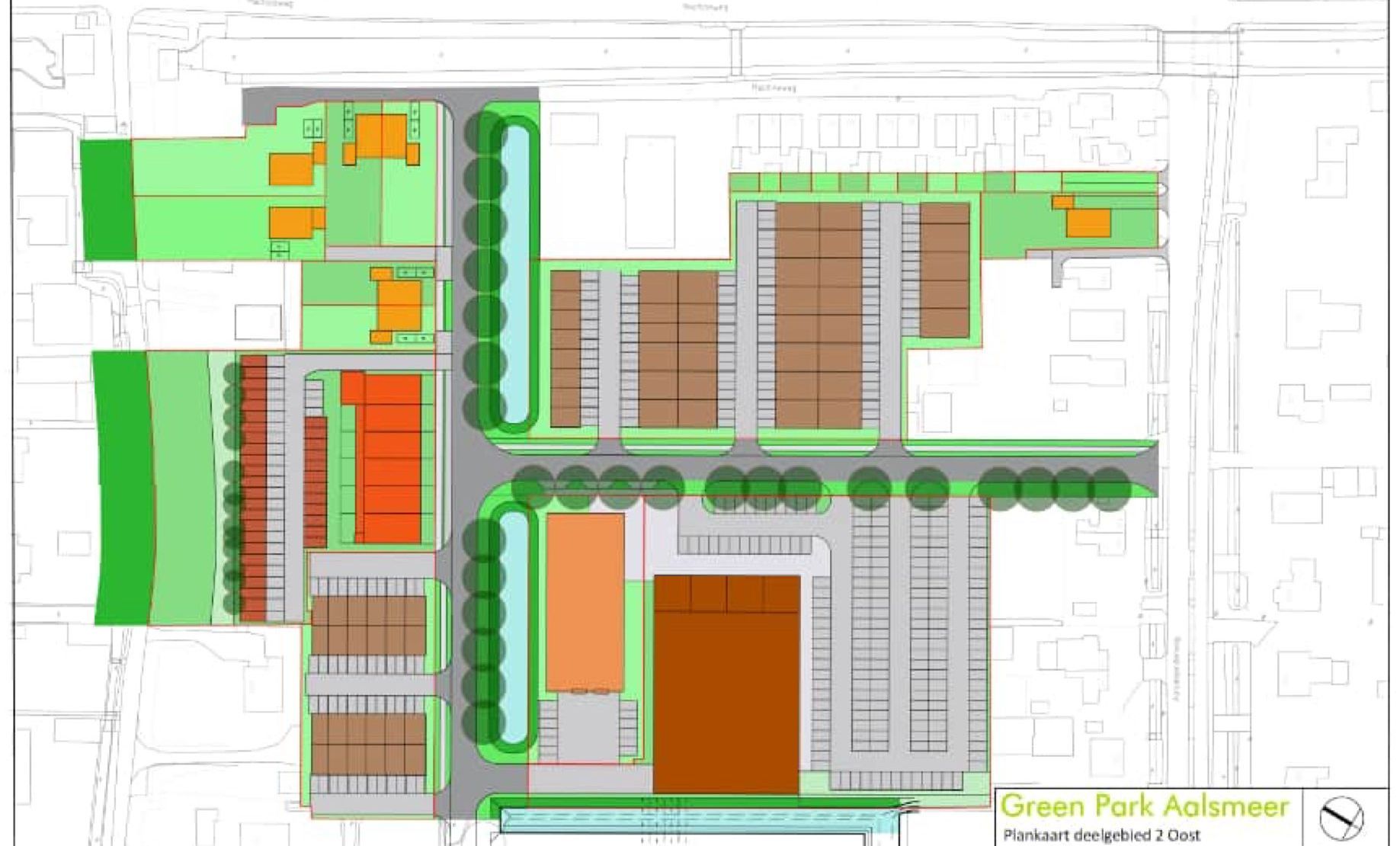
Planning overview GPAII-Oost; better known as the site where the Hoogvliet supermarket is now located.
Enforcement for the maintenance of national monuments
In response to questions and concerns from local residents, our party has submitted written questions to the municipal executive regarding the current condition of Uiterweg 15. This old farmhouse, dating from 1820, is considered by many to be part of the triangle formed by the Historical Garden and the bee house at the beginning of Uiterweg.
Our party wondered, among other things, about the rights and obligations of the owner of a national monument, but also of the municipality; which responsibility lies with whom, and can this be enforced? The municipality's response reveals that an enforcement order was issued to the owner in 2020. The municipality believes the monument can be repaired and has imposed a penalty for this. If the imposed remedial sanctions are not met, the municipal executive can impose a new remedial sanction with a higher penalty or impose an administrative enforcement order.
Naturally, FlorAalsmeer hopes that it will not come to this, and that the building will be restored to its former glory in memory of Aalsmeer's rich history.
Click
here for the full Q&A document.
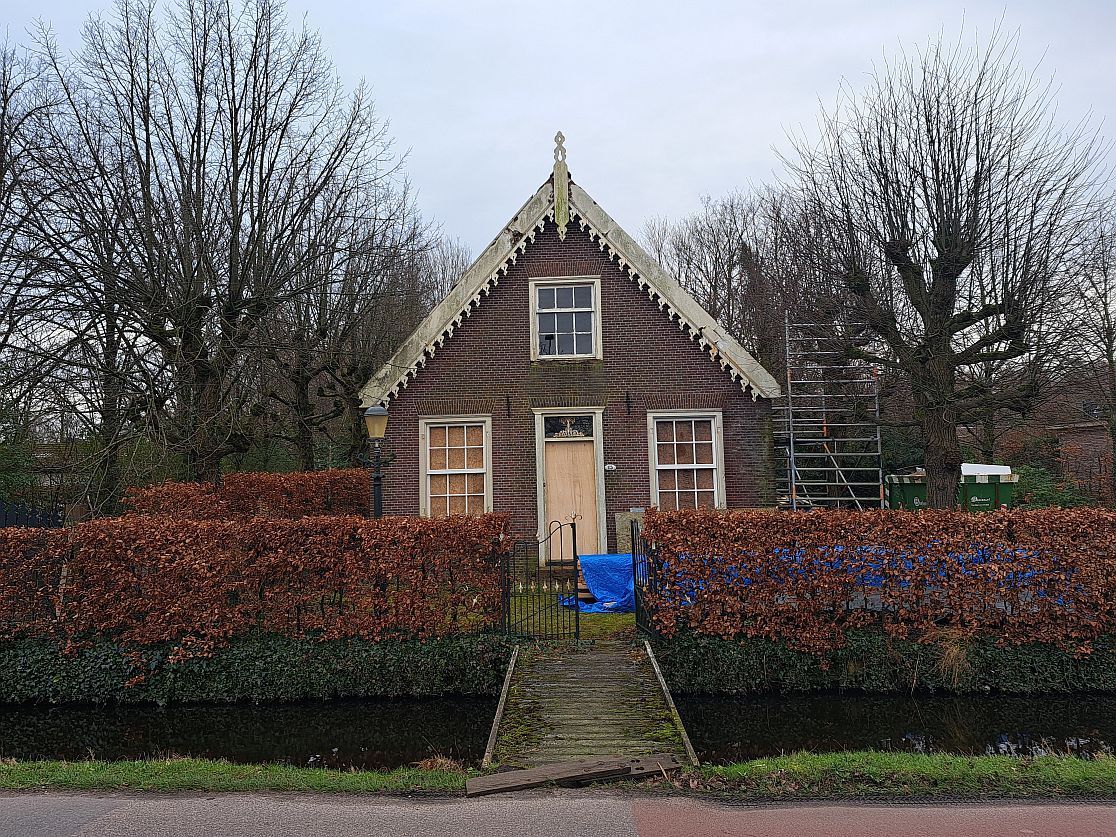
Uiterweg 15 - Farmhouse, first half of the 19th century, with a thatched saddle roof. The front facade features six-pane sash windows, a door with a simple fanlight, and a wooden front. Source: monument register - photo www.nieuwsinaalsmeer.nl
FlorAalsmeer visits Seniors Dijk en Waard (SDW)
On Friday February 9th we were warmly welcomed by
local political party Seniors Dijk en Waard in the town hall of Dijk en Waard.
After participating in a training session of the Knowledge Center for Local Political Parties and the positive introduction to SDW, the idea to visit Dijk en Waard was quickly born.
After the reception and tour, which included a brief tour of the council chamber, we were welcomed by SDW faction chair Joke van Ruitenbeek in the faction room.
Over a cup of coffee, Joke (joined by the other SDW members) explained in detail how the party was founded and has developed over the past ten years. FlorAalsmeer also recognized the difficult moments, which were not shied away from during the conversation.
FlorAalsmeer is busy developing clear guidelines to better represent residents. We can learn from others, such as SDW, in this regard.
FlorAalsmeer is even more inspired by similarities between our municipalities, such as a national road that splits the municipality in two, or a nature reserve that is frequently visited by residents of Alkmaar.
After taking a group photo and inviting Joke, Marjolein, and Richard to come our way, we returned home very satisfied after two hours full of information.
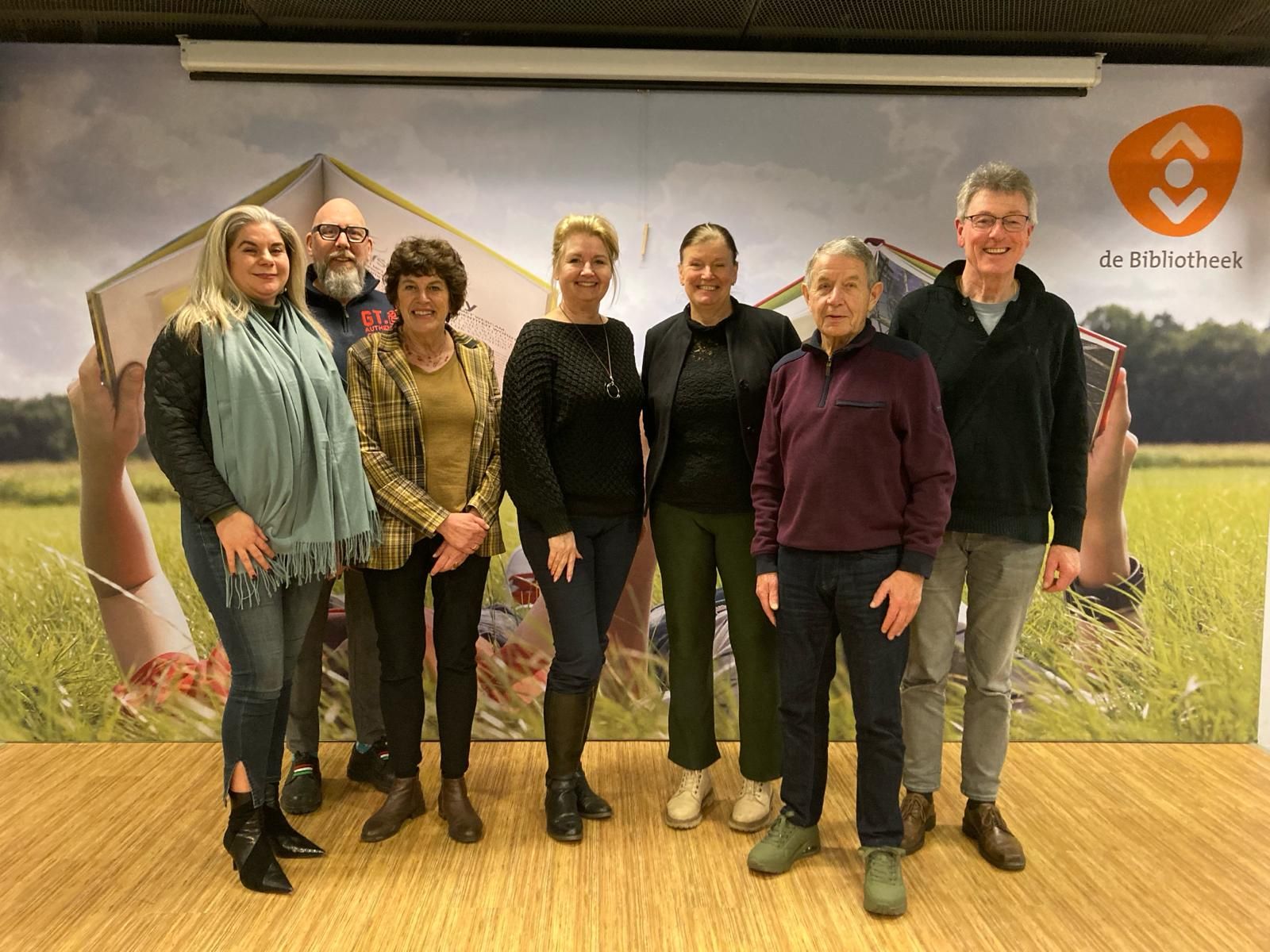
From left to right: Claudia Dekker, Jan Millenaar, Marjolein Jungbäcker (SDW), Judith Keessen, Joke van Ruitenbeek (SDW), Dirk Biesheuvel and Richard den Bak (SDW).
Photo: messenger from the municipality of Dijk en Waard.
FlorAalsmeer council faction guests at 'A World of Flowers'!
Current issues in Aalsmeer politics are the Residential Welfare Care and the Living conditions of migrant workers. These points have already been addressed in committee meetings on several occasions. The discussion threatens to become bogged down in assumptions, and the discussion isn't always based solely on facts, which is undesirable.
The FlorAalsmeer Council faction, with its board and assistance, went on a working visit to the company on Friday afternoon, January 26. HOLEX FLOWERS BV, in the company's largest branch at ROYAL FLORA HOLLAND in Aalsmeer.
In addition to its large Aalsmeer branch, HOLEX FLOWERS BV has offices in Miami (USA) and Shanghai (China) and, with over 160 employees, is the Dutch market leader in flower exports to far-flung destinations.
Every day, millions of stems are prepared and packed for destinations such as the flower market in Seoul, South Korea, the Flower District in Manhattan, New York, but also for customers in Dubai, Singapore or Shanghai.
The FlorAalsmeer group was welcomed by Mr. Nigel Verzaal from the management team of HOLEX FLOWERS BV. During the tour, which lasted over two hours, they were shown how the company operates and how the work processes are organized. From product arrival, inspection, quantity checks, cooling, distribution, packaging, to final shipment, everything is done with the utmost efficiency. Administration and automation, logistically sophisticated workstations and work processes, developed over the company's more than forty years of existence.
Automation has been a serious priority, but the entire process cannot be automated and/or robotized. Human hands are underestimated in the processing of flowers. The packaging of the flowers sold, which involves millions of stems per day, is so diverse due to the orders per product and the specific customer wishes that it cannot be automated. This diversity is undoubtedly the company's strength. HOLEX FLOWERS BV uses migrant workers to process the flowers for shipment, and in some parts of the process, they are even 95% dependent on this group of employees. The majority of employees, including migrant workers, have permanent contracts; only a small number are hired through a temporary employment agency.
The FlorAalsmeer faction was also particularly curious about the housing of the employees. The vast majority of them don't come from Aalsmeer at all, but live in places like Alphen aan den Rijn and Hoofddorp in the Haarlemmermeer region. They don't live in part of a temporary employment agency's home there, but have bought their own house or rent it through regular housing associations.
Migrant workers are of great value to the Aalsmeer-based company HOLEX FLOWERS BV; running a business without them would be impossible. The conversations also reveal the great appreciation for all employees, and this group in particular.
HOLEX FLOWERS BV is a sustainable export company that ships almost 100% of its flower orders by air freight to the world's most distant destinations. The FlorAalsmeer faction was surprised to learn that Schiphol Airport plays only a minor role in shipping these millions of flower stems daily. The majority of HOLEX FLOWERS BV's air freight is shipped directly via Frankfurt Airport or by Eurostar to London, and then by plane across the world, a surprising response for the residents of Aalsmeer. "Aviation Affairs" is on the weekly agenda of the Aalsmeer City Council and various committee meetings. The vital importance of Schiphol Airport for Dutch flower exports is always a recurring argument, but this argument is, to put it mildly, somewhat undermined.
A two-hour tour of HOLEX FLOWERS BV's facility, where visitors were struck by how clean everything was. Clean workstations, a clean atmosphere in the workspace, and the consistent, environmentally friendly sorting of waste materials. The FlorAalsmeer faction is very grateful for the opportunity to make this truly excellent working visit. Armed with a wealth of facts, they will continue their work to refute and challenge assumptions.
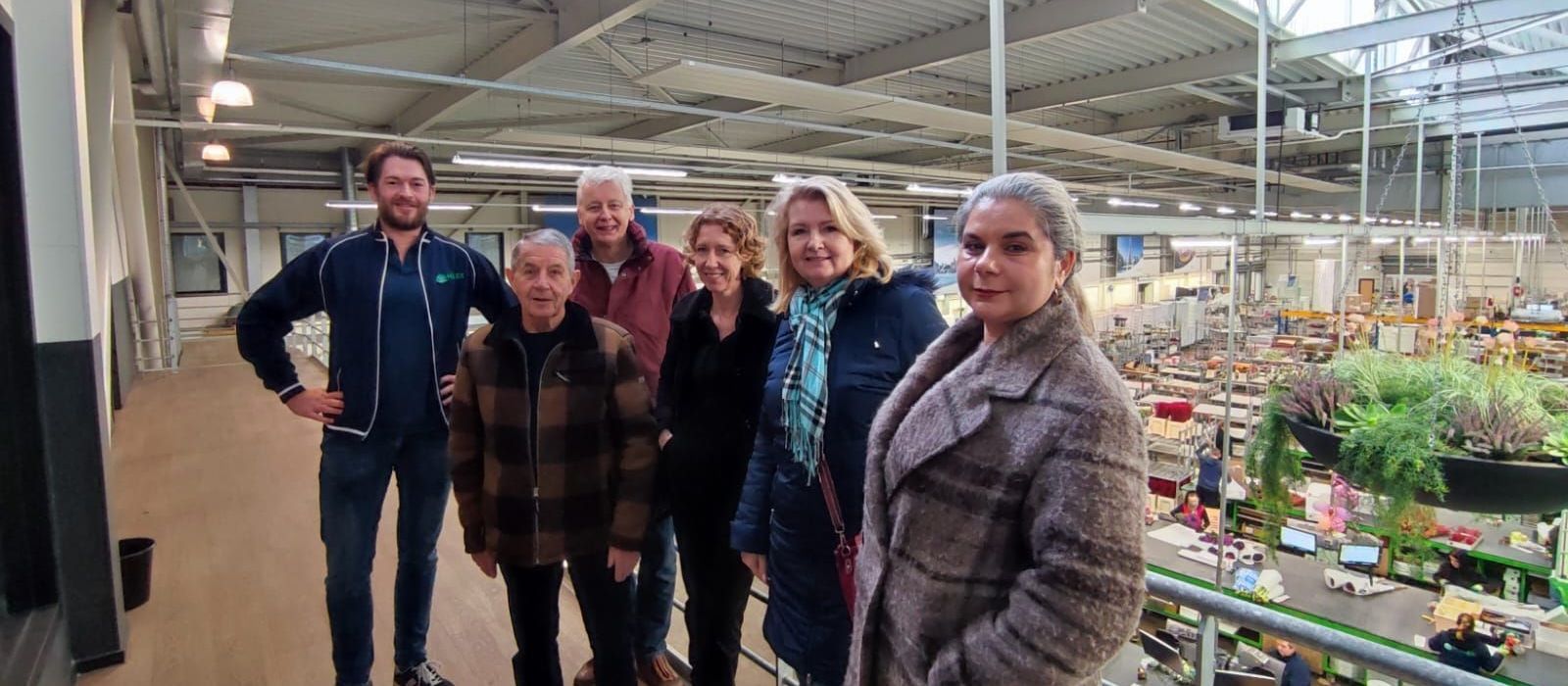
From left to right: Nigel Verzaal (Holex management), Dirk Biesheuvel, Klaas Keessen, Esther Biesheuvel, Judith Keessen and Claudia Dekker.
FlorAalsmeer on Instagram